
Onsite vs. In-Lab Calibration: Which Is Right for Your Tools?
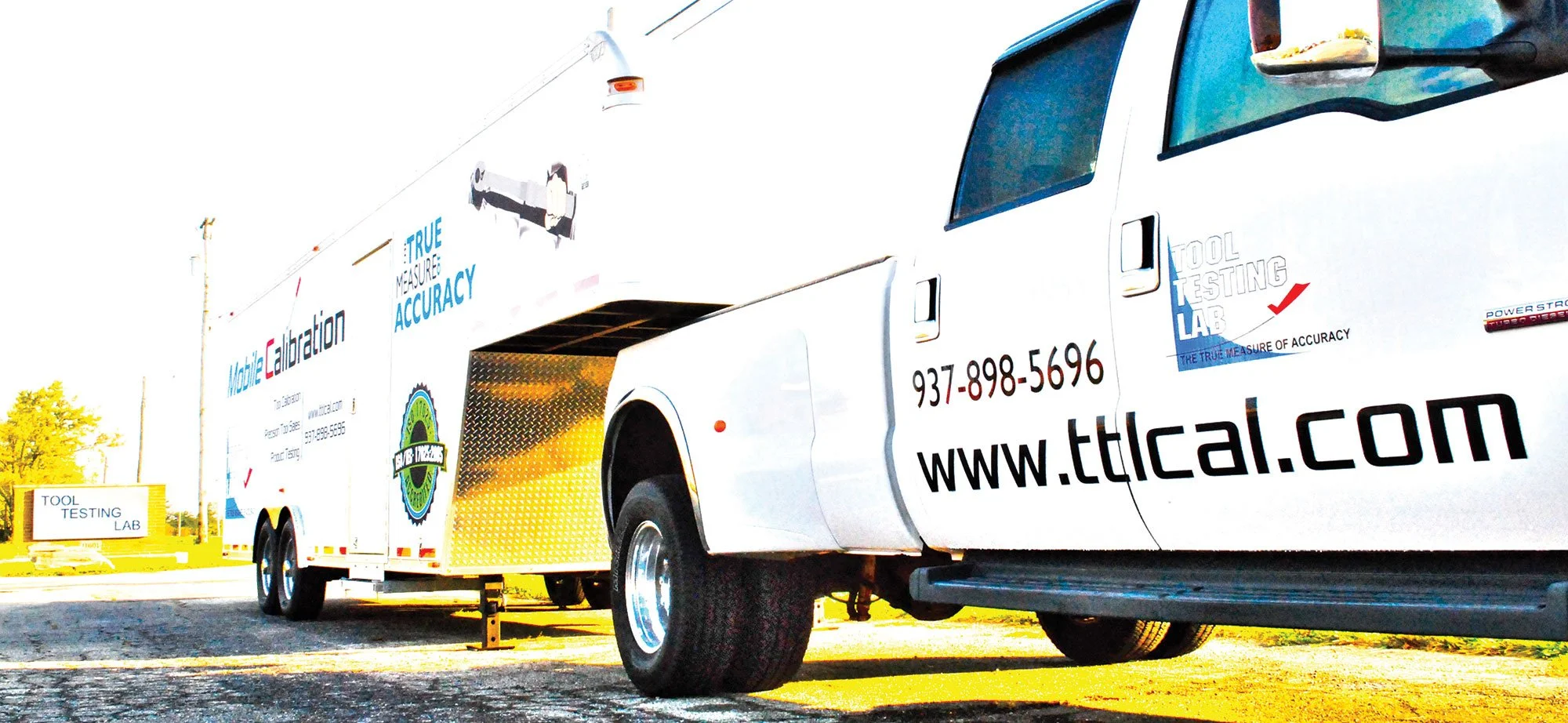
Tool Testing Lab mobile calibration vehicle and trailer equipped to provide on-site testing and calibration services.
When it comes time to calibrate equipment, many customers ask the same question. Should tools be sent to a calibration lab, or should calibration be performed onsite? Which benefits our company the most?
The answer depends on the equipment, the environment, and how the tools are used. Both options have real advantages, and the right choice often comes down to efficiency, accuracy, and minimizing disruption.
What Is In-Lab Calibration?
In-lab calibration means shipping or delivering tools to a calibration laboratory for testing in controlled environments, using reference standards, and with specialized equipment.
This is the most common option for many instruments and works well for tools that are portable, high-volume, or require tightly controlled conditions.
Benefits of In-Lab Calibration
Highly controlled temperature and environmental conditions
Access to a wide range of reference standards and equipment
Efficient processing for multiple tools at once
Ideal for small, handheld, or high-precision instruments
For most tools, in-lab calibration provides the highest level of consistency and repeatability.
What Is Onsite Calibration?
Onsite calibration brings trained technicians and portable reference equipment directly to your facility. This option is often used for large, heavy, or fixed equipment that is difficult or impractical to ship.
Onsite service can also reduce downtime by keeping tools in place while they are calibrated.
Benefits of Onsite Calibration
No shipping or handling for large or sensitive equipment
Reduced downtime for critical tools
Calibration performed in the actual operating environment
Ideal for surface plates, CMMs, presses, and fixed systems
Onsite calibration is a practical solution when moving equipment would interrupt operations.
Which Option Is More Accurate?
Both onsite and in-lab calibration can deliver accurate, traceable results when performed correctly. The key difference is the environment.
In-lab calibration provides tighter environmental control, ideal for high-precision measurements. On-site calibration focuses on accuracy within real-world operating conditions.
At Tool Testing Lab, both services follow documented procedures and use NIST traceable standards. The goal is always the same. Reliable, repeatable measurements you can trust.
How to Choose the Right Approach
Ask a few simple questions:
Is the equipment easy to ship?
Would removing the tool disrupt production?
Does the tool require tight environmental control?
Is minimizing downtime a priority?
In many cases, customers use both services. Smaller tools are sent to the lab, while larger systems are serviced onsite.
The best calibration partner does not push one option or offering by default. They help you choose the right solution for each tool and situation.
Tool Testing Lab offers both in-lab and on-site calibration services. Our team can review your equipment list and recommend the most efficient approach based on accuracy, turnaround time, and operational impact.
Request a quote today to keep your equipment performing the way it should.
