
Traceability vs. Accreditation: What Is the Difference?
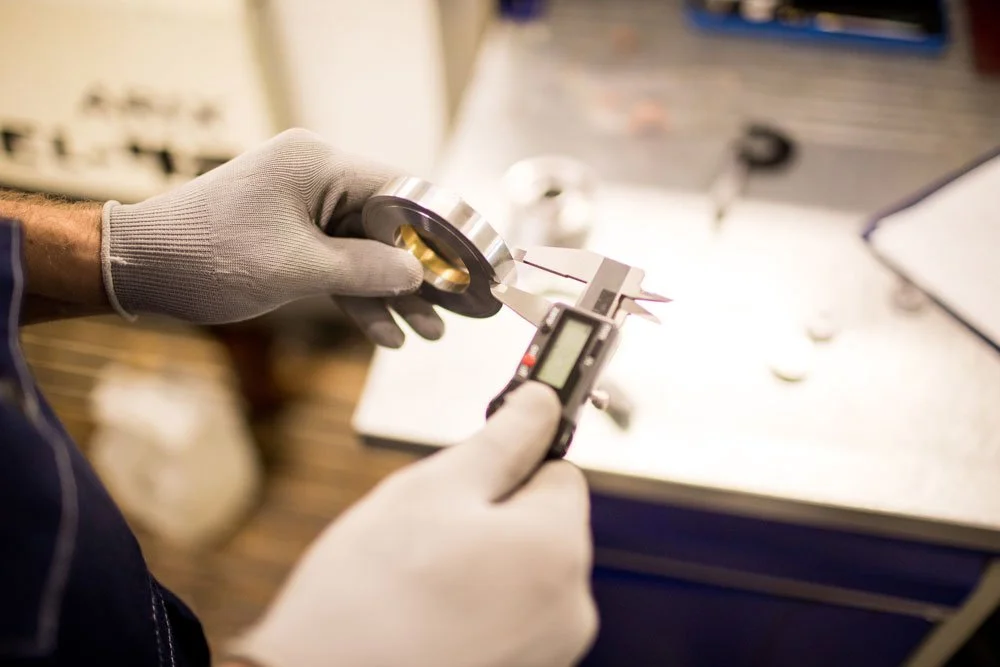
Technician using caliper to measure external dimensions of the instrument.
When reviewing calibration certificates or selecting a calibration provider, two terms come up often. Traceability and accreditation. While they are closely related, they are not the same thing, and understanding the difference matters.
Here is a simple breakdown.
What Is Traceability?
Traceability means that a measurement can be linked back to a recognized standard through an unbroken chain of comparisons. In calibration, this usually means NIST traceable standards.
When a tool is traceable, it shows that the measurements were compared against known references and documented properly. Traceability confirms where the measurement comes from, but it does not evaluate how the calibration process itself is performed.
Many calibration providers offer traceable results without being accredited.
What Is Accreditation?
Accreditation goes a step further. ISO 17025 accreditation means a laboratory has been independently assessed for technical competence, procedures, equipment, uncertainty calculations, and quality systems.
An accredited lab is evaluated regularly to ensure:
Technicians are properly trained
Equipment is suitable and maintained
Calibration methods are valid
Measurement uncertainty is calculated correctly
Results are consistent and repeatable
Accreditation verifies not just the measurement, but the entire process behind it.
Traceability confirms that a measurement is linked to a standard. Accreditation confirms that the lab producing the measurement is competent to do so.
In regulated industries or audited environments, accreditation often carries more weight because it demonstrates consistency, oversight, and technical rigor. In other situations, traceability may be sufficient depending on internal requirements.
Understanding the difference helps you select the right level of calibration for your tools and your operation.
Tool Testing Lab provides NIST traceable calibration services, with many offerings covered under ISO 17025 accreditation. Our team is always available to help you understand your certificates and choose the right service.
Contact us or request a quote to get started.
