
When Downtime Costs More Than Calibration
Every facility plans for the cost of calibration but far fewer plan for the cost of taking tools out of service.
Whether you're maintaining aircraft, running production equipment, or managing a quality program, calibration is only one part of the equation. The bigger question is often this:
How much does it cost when your operation has to stop?
Calibration Isn't Usually the Expensive Part
Many organizations compare calibration providers based on price per tool. But the true cost of calibration includes much more than the invoice.
Consider everything involved when critical equipment is unavailable:
Production delays
Rescheduled maintenance
Idle technicians
Missed deadlines
Administrative time spent coordinating equipment
Shipping, receiving, and tracking tools
In many environments, these indirect costs quickly outweigh the cost of the calibration itself.
Every Operation Has Different Needs
For many organizations, shipping tools to a calibration laboratory remains the best solution.
In fact, for the majority of portable tools and instruments, it is often the most efficient and cost-effective option. Combined with Tool Testing Lab's average turnaround time of just 2.7 business days, many customers are able to ship their equipment, have it calibrated, and get it back quickly with minimal disruption to their operation.
But not every calibration challenge looks the same.
Some organizations manage hundreds of tools across multiple departments. Others rely on large, installed equipment that simply can't be boxed up and shipped. In these situations, the true cost isn't shipping, it's the operational impact of taking equipment or production offline.
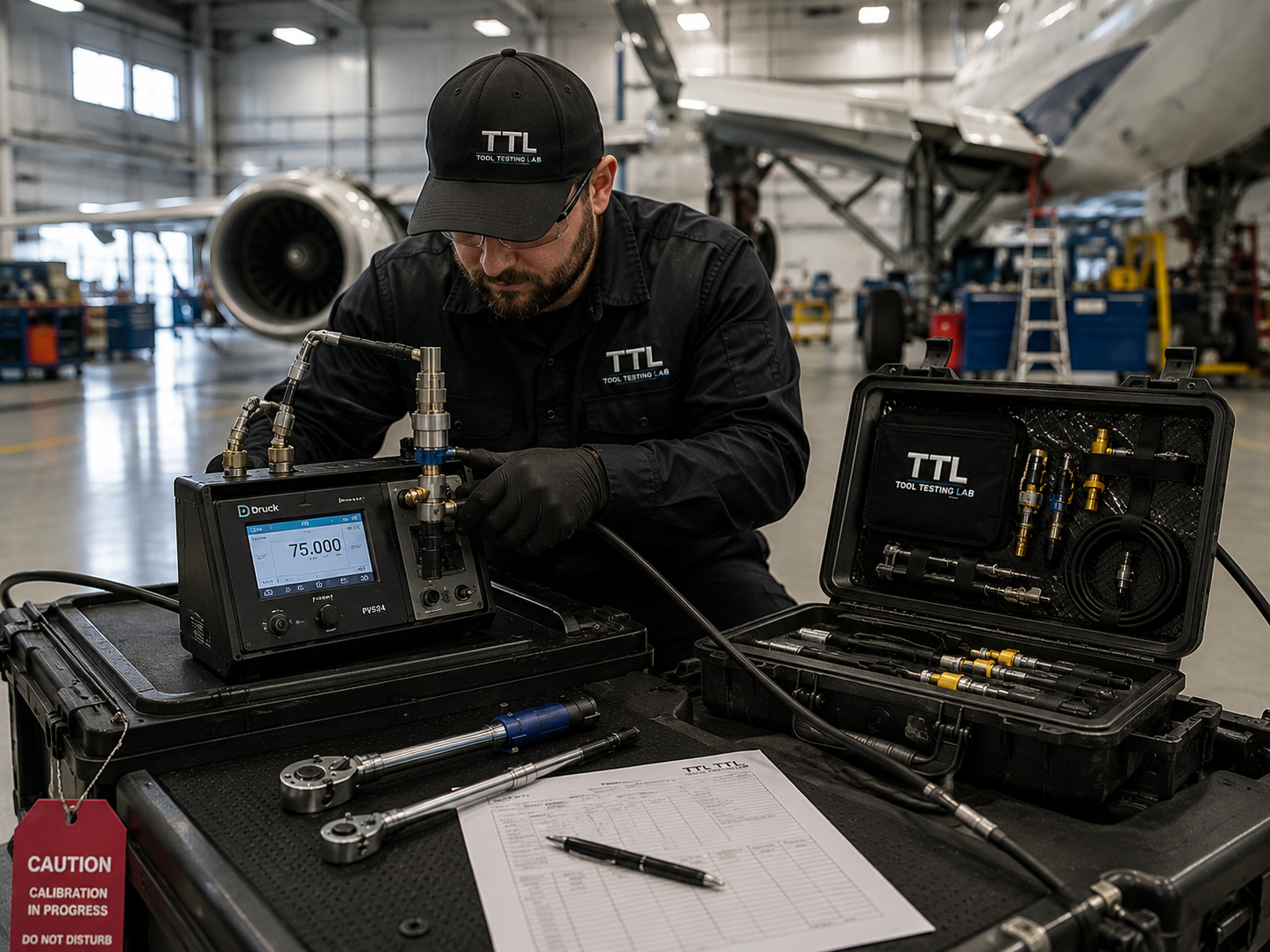
That's where on-site calibration becomes a strategic solution. Rather than replacing in-lab calibration, it complements it by helping organizations keep critical operations moving when downtime isn't an option.
When Keeping Equipment in Place Matters
Imagine managing hundreds of calibrated tools across a busy manufacturing facility or supporting an aircraft maintenance operation where every delay affects schedules.
In situations like these, removing equipment from service (even temporarily) can disrupt productivity far more than the calibration itself.
That's when organizations begin looking beyond the price of calibration and focus on the cost of downtime.
The Goal Is to Keep Work Moving
Sometimes the right answer is shipping tools to our laboratory. Other times, it means bringing our technicians to your facility.
For large calibration programs, emergency situations, or equipment that cannot be reasonably transported, on-site service can help minimize operational disruption while maintaining the same commitment to accurate, traceable measurements.
The goal isn't to make calibration cheaper, the goal is to make calibration work better for your operation.
Start with the Right Conversation
There isn't a one-size-fits-all calibration strategy. The best approach depends on your equipment, your production schedule, your industry, and your operational priorities.
Our team will help you determine whether shipping your tools or scheduling on-site service is the right fit. Sometimes the answer is one or the other. Sometimes it's a combination of both.
Because successful calibration isn't just about accurate measurements; it's about keeping your business moving.
Interested in discussing what’s best for your organization? Let’s chat.
